Bishop Schneider says Pope Francis’ statements on homosexual ‘blessings’ are ‘confusing’
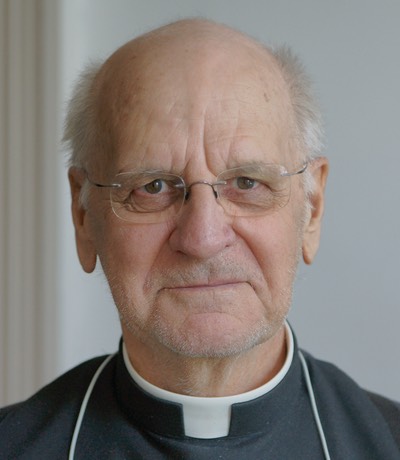
Bishop Athanasius Schneider said that Pope Francis' reply to questions about the Church's teaching on the impossibility of homosexual blessings and female ordination, was 'confusing and vague.'
 Bishop Athanasius
Schneider in Rome, October 26, 2023Michael Haynes/LifeSiteNews
Bishop Athanasius
Schneider in Rome, October 26, 2023Michael Haynes/LifeSiteNews
- 24
Thu Oct 26, 2023 - 3:20 pm EDT
Listen to this article
0:00 / 5:50
VATICAN CITY (LifeSiteNews) — Bishop Athanasius Schneider has described Pope Francis’ recently published response to dubia questions sent to him by five cardinals as “unsatisfactory”, saying that “they caused more dubia [than] they resolved.”
The Pope’s reply was “confusing and vague,” said Schneider, accusing the text of having been written with the “art of confusion.”

“We have to be honest,” Bishop Schneider insisted. “We cannot make some fictions and to lie to one another. It would be not wise, we are not little children, we have to be honest.”
READ: Bishop Schneider joins Cardinal Müller, calls new dubia ‘highly urgent and meritorious’
On October 2 five cardinals made public a series of letters which they have sent to Pope Francis, asking five urgent questions about possible attacks on the Church’s doctrines, including the possibility of homosexual “blessings,” the weight of teaching afforded to the synod, female ordination, and the necessity of repentance in sacramental Confession.
The signatories of the dubia are: Cardinals Walter Brandmüller, former prefect of the Pontifical Committee for Historical Sciences; Raymond Leo Burke, former prefect of the Apostolic Signatura; Juan Sandoval Íñiguez, former Archbishop of Guadalajara; Robert Sarah, the former prefect of the Dicastery for Divine Worship and the Discipline of the Sacraments; and Joseph Zen, the former bishop of Hong Kong.
— Article continues below Petition —
Urge Pope Francis to answer the Dubia correctly: no one can bless sin
Show Petition Text
13982 have signed the petition.
Let's get to 15000!
Add your signature:
Haut du formulaire
Bas du formulaire
Keep me updated via email on this petition and related issues.
The five cardinals had written to the Pope on July 10, and received a reply from him on July 13, in a letter dated July 11.
In his response to the July dubia Pope Francis effectively told clergy that they can decide for themselves whether to “bless” homosexual unions and failed to affirm the Church’s doctrine on the impossibility of ordaining women to the sacred priesthood, writing that women’s ordination “can be the subject of study.”
Schneider expressed strong support for the recent dubia from the five cardinals, calling it “a great work” which “will go down in history.”

Taking questions at the end of the launch of his new catechism in Rome, Bishop Schneider weighed in on the topic of the recently published dubia submitted to the Pope Francis.
“I think it is a great work, it will go down in history,” he said. “It should live not just for these times, but for a hundred years, for eternity.”
“It was a most needed action, to present the Pope with the dubia,” said Schneider.
READ: Five cardinals write Dubia to Pope Francis on concerns about Synod, Catholic doctrine
The rephrased dubia questions in particular were as follows:
1.Is it possible for the Church today to teach doctrines contrary to those she has previously taught in matters of faith and morals, whether by the Pope ex cathedra, or in the definitions of an Ecumenical Council, or in the ordinary universal magisterium of the Bishops dispersed throughout the world (cf. Lumen Gentium 25)?
2.Is it possible that in some circumstances a pastor could bless unions between homosexual persons, thus suggesting that homosexual behavior as such would not be contrary to God’s law and the person’s journey toward God? Linked to this dubium is the need to raise another: does the teaching upheld by the universal ordinary magisterium, that every sexual act outside of marriage, and in particular homosexual acts, constitutes an objectively grave sin against God’s law, regardless of the circumstances in which it takes place and the intention with which it is carried out, continue to be valid?
3.Will the Synod of Bishops to be held in Rome, and which includes only a chosen representation of pastors and faithful, exercise, in the doctrinal or pastoral matters on which it will be called to express itself, the Supreme Authority of the Church, which belongs exclusively to the Roman Pontiff and, una cum capite suo, to the College of Bishops (cf. can. 336 C.I.C.)?
4.Could the Church in the future have the faculty to confer priestly ordination on women, thus contradicting that the exclusive reservation of this sacrament to baptized males belongs to the very substance of the Sacrament of Orders, which the Church cannot change?
5.Can a penitent who, while admitting a sin, refuses to make, in any way, the intention not to commit it again, validly receive sacramental absolution?
Pope Francis has, so far, not responded to these questions.
Topics
Tagged as
