EXCLUSIVE: Priest excommunicated after defending Tradition speaks out
Fr. Leonardo Maria Pompei tells LifeSiteNews how upholding traditional Catholic teaching through online preaching led to his suspension, a schism charge, and now excommunication.
 St. Peter's Basilica,
Vatican CityLifeSiteNews/Tommy Willits
St. Peter's Basilica,
Vatican CityLifeSiteNews/Tommy Willits
- 28
Tue Sep 22, 2026 - 1:09 pm EDT
Listen to this article
30 min
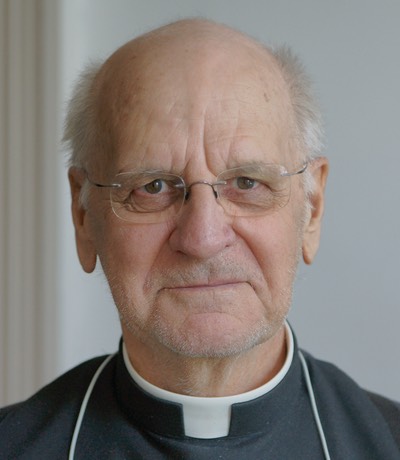
(LifeSiteNews) — An Italian bishop has declared that Father Leonardo Maria Pompei, a priest in his diocese well known for his online preaching, has incurred automatic excommunication for schism.
The decision, announced by Bishop Mariano Crociata of Latina-Terracina-Sezze-Priverno on September 11, came at the conclusion of a canonical investigation requested by the Dicastery for the Doctrine of the Faith after Pompei announced he would resign as a parish priest and continue his ministry within the world of Catholic Tradition.

According to statements released by the diocese and as reported by the Italian press, the charge of schism stems from public declarations in which Pompei allegedly stated that he “no longer recognizes himself as being in communion with his bishop, with the Pope, and with the bishops of the Catholic Church.”
Pompei is the latest in a string of priests and bishops sanctioned under Pope Francis and now Pope Leo XIV for their criticism of the Church in the post-conciliar era. What sets his case apart is his public profile: for over a decade he has built one of Italy’s best-known online catechetical apostolates, reaching thousands of followers with what he describes as the Church’s traditional, unaltered teaching.
In Part 1 of this interview, Pompei gives an account of the proceedings against him – from the penal precept and suspension a divinis through the excommunication decree for schism – and his reasoning for not appealing it. Today, Pompei is broadly aligned with the positions of Archbishop Carlo Maria Viganò.
Below follows Part 1 of LifeSiteNews’s interview with Fr. Pompei:
LifeSiteNews: Dear Fr. Leonardo, first
of all, thank you for granting us this interview. You are probably one of the
best-known priests in Italy because of the apostolate you have carried out for
a decade, not only offline but also – perhaps above all – online. You are now
also known, however, for having become yet another Catholic priest to be “shown
mercy” by the Church under Bergoglio and Prevost. On September 4, 2025, the
Bishop of Latina-Terracina-Sezze-Priverno, Mariano Crociata, had already issued
a decree suspending you a divinis “from all acts of the power
of orders, from all acts of the power of governance, and from the exercise of
all rights or functions attached to an office.”
According to media reports – including Avvenire, the official
newspaper of the Italian bishops – this penalty was imposed because you
violated a penal precept issued by the bishop, ordering you not to convene
meetings and to suspend your social-media activity. What heresies were you
spreading on social media? Were you promoting religious indifferentism and
homosexual ideology?
Fr. Leonardo Pompei: No, I was obviously not spreading any of those heresies. Had I promoted religious indifferentism, publicly blessed homosexual unions, or supported any of the numerous deviations that are now widely tolerated – when not openly promoted – in ecclesiastical circles, I would most likely never have been subjected to any measure at all.
My “fault,” on the contrary, was that I continued to carry out an integrally Catholic apostolate: preaching the doctrine of all time; denouncing the errors devastating the Church; defending the traditional faith, morality, and liturgy; and refusing to conform my priestly conscience to the demands of the new anthropocentric religion that has established itself over recent decades.
All of this led me, at the end of a long journey that began well before September 2025 and of which the ecclesiastical authorities were aware, to ask myself how I could continue exercising the priestly ministry. Its exercise was becoming increasingly difficult, if not impossible, within an ecclesial reality in which preaching Catholic doctrine in its entirety on matters of faith and morals had become a truly Herculean task. Such preaching was opposed not only by many of the faithful, who were no longer accustomed to hearing certain truths, but also by pastors almost universally and unanimously aligned with that kind of new and “strange religion” that has arisen within a new and exceedingly strange caricature of the Church, commonly called the “Church of today.”
Haut du formulaire
SUBSCRIBE TO OUR DAILY HEADLINES
Bas du formulaire
This journey eventually led me to decide to resign as a parish priest and join the broad and varied world of Catholic tradition, so that I could continue to defend and spread the faith and morals of all time, celebrate the Mass of all time, and administer the sacraments of all time. In this way, I intended to free myself from having to carry out commands that I found impossible to obey – the obligation to distribute Holy Communion in the hand to the faithful is only one example among many – or to adhere to pastoral orientations, such as so-called synodality, that are wholly foreign to the life, Tradition, and hierarchical constitution of the Church. I formally communicated this decision to the bishop on August 29, 2025.
The account circulated by the media – according to which the penal precept was issued and the suspension followed simply because I continued to convene meetings and use social media – therefore represents only the final stage of the affair. The penal precept and the ensuing suspension a divinis were not the beginning of the story, but the outcome of a much longer and more complex conflict, whose principal contours I have necessarily attempted to outline here only in broad terms.
The affair arose essentially from my public stance on the crisis in the Church and, above all, from my decision to follow to its ultimate conclusions what my properly formed priestly conscience required of me before God.
In concrete terms, the penal precept ordered me to do two things. The first was not to communicate these important and decisive life choices to the multitude of faithful who followed me online. The second was to discontinue a substantial part of my public apostolate, then 15 years old, which had begun during my association with the Franciscans of the Immaculate and had been inspired by Saint Maximilian Maria Kolbe’s insights into the apostolate through the modern means of social communication. That work began quietly and almost unnoticed, but surprisingly developed over the years until it reached thousands of souls.
I was therefore being ordered to remain silent, leaving thousands of people unaware of what was happening to me. My fate would instead be communicated, if at all, in the manner and at the time chosen by those who showed evident hostility toward what I represented, for one fundamental reason: I embodied the so-called “pre-conciliar Church.” At the same time, those souls would have been deprived of a voice they considered – and still consider – an effective instrument of their conversion and return to God. This is attested by a veritable flood of private messages and emails, as well as by the innumerable public comments that can still be read beneath the videos on my YouTube channel.
All this occurred without my being accused of having taught any heresy or doctrinal error, as is also plainly evident from the proceedings that followed this first stage of the affair. Why should I have stopped preaching if no heresy was being imputed to me and no error was identified for me to correct? Moreover, up to that point, I had never uttered even a single public word against any ecclesiastical authority, against the Second Vatican Council, or on any comparable matter.
It was therefore an order that I could only judge unjust and lacking any proportionate cause. In light of what subsequently happened, it appeared objectively calculated to provoke formal disobedience, which could then be used to justify first the suspension and later the further measures. That is precisely what occurred.
I could not obey that injunction, because Catholic obedience is never blind and can never be separated from truth and the law of God. An ecclesiastical superior must certainly be obeyed when he commands legitimately within the scope of his authority; but no human authority can compel a priest to act against a certain conscience, nor prevent him from defending the faith and warning souls against errors that endanger their salvation.
The suspension a divinis, presented as the formal consequence of violating the precept, must therefore be placed within the entire context that preceded it. I could not observe that precept without gravely betraying the duties I assumed before God on the day of my priestly ordination. This is precisely the point that the media narrative – having evidently stopped at the formal and official version of events – has almost always omitted.
READ: Pope Leo ignores audience request from traditionalist Summorum Pontificum pilgrims
LSN: Now there is even a decree of excommunication. Can you help us reconstruct what happened?
Pompei: First, a clarification is necessary. What the diocese published on September 11, 2026, was not a new decree of excommunication issued on that date, but an official communication making public the outcome of an extrajudicial penal process that had already concluded several months earlier. The decision is dated May 22, 2026, and was served on me by certified email (PEC) on May 27.
The proceeding was the next stage after the penal precept and the suspension a divinis we have just discussed. After I publicly stated the reasons for my resignation as a parish priest and my intention to continue my priestly ministry within the world of Catholic Tradition, I was accused of the canonical delict of schism.
The trial proceeded in my absence. I chose not to appoint counsel of my own choosing because I did not accept that the accusation’s very premise was well founded; counsel was therefore appointed for me. Nevertheless, I personally submitted a 10-page brief setting out my reasons in detail. That brief also contains facts and arguments that, at least for the time being, I do not consider it appropriate to make public.
The dispositive part states verbatim that “the Reverend Don Leonardo Pompei is guilty of the reserved delict of schism,” under canon 751 of the Code of Canon Law. The same canon defines schism as “the refusal of submission to the Supreme Pontiff or of communion with the members of the Church subject to him.” As a consequence of that declaration, the decision states that I had incurred the latae sententiaeexcommunication provided for in canon 1364 §1.
It is important to understand this detail as well: the decision does not say that excommunication was being imposed at that moment as a new penalty. Rather, it declares that I had already incurred it automatically because of certain conduct and statements subsequently judged by the ecclesiastical authority to constitute the delict of schism.
Among the grounds for the accusation were the positions I had taken in official documents submitted to the ecclesiastical authority, both before and during the proceeding, as well as what I had publicly stated through my online activity. In particular, consideration was given to the decision – formally communicated to the bishop by certified email in September 2025 – that I would no longer celebrate the Novus Ordo Missae, and to my stated consequent inability to continue exercising public priestly ministry within the ordinary structures of the diocese and in communion with the current senior ecclesiastical hierarchy.
The central issue, therefore, was no longer simple disciplinary disobedience. I was being accused of refusing submission to the Roman Pontiff and communion with the members of the Church subject to him; the conclusions I had reached after a long and painful journey of conscience were being characterized as schismatic.
Here too, however, the facts must be carefully distinguished from their legal interpretation. It is a fact that I publicly adopted certain positions; that I stated that I could no longer celebrate the Novus Ordo Missae; that I chose to continue my ministry within the world of tradition; and that I expressed a radically critical judgment on the crisis afflicting the Church and on the authorities promoting its present course. It is, however, the ecclesiastical authority’s interpretation that all this necessarily constitutes the canonical delict of schism.
It is precisely this interpretation that I dispute. I have never intended to separate myself from the Catholic Church, establish another church, or reject the faith I received. On the contrary, I made those choices because I believed – and continue to believe – that I could not preserve in their integrity the Catholic faith, Catholic morality, Catholic liturgy, and fidelity to the duties of my priesthood if I continued outwardly to adhere to orientations that I judge objectively incompatible with what the Church has always taught and practiced.
The paradox is therefore evident: I am declared a schismatic not because I abandoned Catholic doctrine or embraced a new religion, but because I refused to abandon what the Church has always believed, taught, and celebrated. No specific heresy was imputed to me; no proposition contrary to the faith was identified for me to retract. What was imputed to me as schismatic was, instead, my inability in conscience to recognize as authentically Catholic certain doctrines, liturgical practices, and pastoral choices that have arisen in the contemporary Church.
The decision also contains a particularly grave element. Invoking canon 1364 §2, it raises the possibility of further penalties if what it calls “prolonged contumacy” or “the gravity of the scandal” were to persist, not excluding dismissal from the clerical state.
In other words, after the suspension a divinis and the declaration of excommunication, the possibility is also raised of the most severe penalty applicable to a cleric: dismissal from the clerical state. There are further elements of the affair that, until now, I have chosen not to disclose out of prudence, charity, and respect for the persons involved. I sincerely hope that it will never become necessary to address them publicly and that the entire matter may be evaluated by everyone in truth and with an authentic sense of ecclesial responsibility.
This, in the briefest terms, is the sequence of events: my resignation as parish priest and the communication of my decisions; the penal precept; the suspension a divinis; the opening of the proceeding for schism; my defense brief; the decision of May 22, served on me on May 27; and finally the diocese’s public communication of September 11, 2026.
The formal reconstruction is therefore relatively simple. Far more complex is the decisive question: in this ecclesial tragedy, who has truly separated himself from the faith and Tradition of the Catholic Church? It is on this plane – doctrinal, theological, and spiritual before it is canonical – that the entire affair must be judged.
LSN: Under the new Code of Canon Law, schism is “the refusal of submission to the Supreme Pontiff or of communion with the members of the Church subject to him.” And, at least according to press reports, you stated that you no longer considered yourself effectively in communion with the present Pope and the bishops. Do you therefore not recognize Leo XIV as the legitimate Pontiff and the bishops as the legitimate occupants of their sees? Or is your position more complex?
Pompei: My position is certainly more complex. I do not state with certainty that Leo XIV is not the legitimate Pontiff, nor do I claim to pronounce a definitive judgment on the canonical status of the current occupants of episcopal sees. I do, however, confess to harboring grave and well-founded doubts about the true status of the post-conciliar pontiffs, particularly the last two, in the face of a crisis of authority without precedent in the history of the Church.
I am, of course, familiar with the so-called Cassiciacum Thesis, formulated by Father Michel-Louis Guérard des Lauriers. I have always regarded it as an intelligent and theologically serious attempt to explain the crisis of authority in the Church; in some respects, I also find it persuasive. It distinguishes between the material occupation of the See and the formal possession of papal authority: the person canonically designated would occupy the See materially, but would not formally receive authority for as long as there remained in him an obstacle incompatible with the very purpose of the papacy.
I have not, however, come to regard this thesis as a certain and definitively established solution. For centuries, the question of a heretical pope, the possible loss of office, and the legal consequences of a possible defection from the faith has been debated by the most authoritative theologians, without the Church providing a definitive solution directly applicable to the present situation. I therefore do not consider myself to possess either the authority or all the elements necessary to turn my doubts into a definitive judgment.
I therefore consider the position recently set out by Archbishop Carlo Maria Viganò in his book Capital Schism, and further clarified in the very interview he granted Gaetano Masciullo for LifeSiteNews, to be more correct, measured, and less divisive. I share this position to a large extent and intend to return to it at length in a dedicated series of catecheses.
Archbishop Viganò first distinguishes the papacy, a divine and indefectible institution, from the person who occupies its chair at a given moment. The office belongs to Christ; the pontiff remains a free man who may correspond to the grace of office or resist it and use the authority he has received against the purpose for which it was conferred.
On this view, one need not privately declare the See vacant in order to recognize that its occupant can exercise his office in contradiction to its purpose. Archbishop Viganò expressed this with particular clarity: the office belongs to Christ, and the person who occupies it today truly occupies it, but exercises it against the purpose for which it exists.
This avoids two opposite extremes, which Archbishop Viganò himself describes as mirror-image errors: papolatry and sedevacantism. The papolater says that because a man is pope, everything he says or does must necessarily be good and Catholic. The sedevacantist, by contrast, concludes that because what the man says or does is not good, he cannot be pope in any sense. Both positions ultimately identify the person completely with the office.
I do not possess the jurisdiction to depose a pope or authoritatively declare the Apostolic See vacant. Nor do I intend to turn a still-disputed theological question into a kind of new dogma or another source of division among Catholics who have remained faithful to Tradition. I can, however – and in conscience must – recognize the objective incompatibility between numerous teachings and actions of the post-conciliar pontiffs and the perennial Magisterium of the Church.
The decisive distinction, therefore, is between deposing and resisting. Saint Robert Bellarmine taught that just as it is lawful to resist a pontiff who attacks the body, so it is lawful to resist him when he attacks souls: sicut licet resistere Pontifici invadenti corpus, ita licet resistere invadenti animas. To resist, however, is not to arrogate to oneself the power to depose.
When I stated that I no longer considered myself in communion with the present Pope and the bishops, I did not mean that I had separated myself from apostolic communion, from the papacy, from the episcopate, or from the Catholic Church founded by Our Lord Jesus Christ. I meant that I cannot be in communion with them insofar as they adhere, and demand that the faithful adhere, to principles, doctrines, and practices belonging to the new conciliar and synodal religion, which in many respects are objectively incompatible with the faith, morality, liturgy, and hierarchical constitution of the Church.
The true heart of the problem is admirably expressed in the Roman Canon itself. In the Te igitur, the Church prays and offers the Sacrifice “una cum famulo tuo Papa nostro N. et Antistite nostro N. et omnibus orthodoxis atque catholicae et apostolicae fidei cultoribus“: together with the Pope, the bishop, and all those who profess, preserve, and promote the orthodox, Catholic, and apostolic faith.
This venerable formula does not present communion with the Pope and the bishop as a personal, absolute, and unconditional adherence separable from the profession of the true faith. On the contrary, it presupposes that the Pope and the bishop are the first guardians and defenders of the Catholic faith received from the apostles. The una cum cannot be isolated from the words that immediately follow it: orthodoxae atque catholicae et apostolicae fidei cultoribus. Hierarchical communion is intrinsically ordered and subordinate to communion in the same apostolic faith.
What happens, then, when those who should be the first guardians of the faith handed down by the apostles use authority to promote principles that contradict that faith? Is it still possible to speak of authentic Catholic communion apart from the profession of faith? Or does such a claim reduce ecclesial communion to mere legal membership and personal obedience, emptying it of its supernatural foundation?
Ecclesial communion is not personal solidarity with the holder of an office, nor unconditional adherence to his every teaching or command. It is first and foremost communion in the same faith, the same sacraments, and the same governance, which exists to preserve the Deposit of Faith and lead souls to salvation. No authority can invoke ecclesial communion in order to compel the faithful to accept what contradicts Apostolic Tradition, because the Pope is the guardian of Revelation, not its master.
Consequently, I am not the one rejecting Catholic communion. Rather, I reject the attempt to impose upon me, under the name of communion, adherence to doctrines, rites, and orientations incompatible with that orthodox, Catholic, and apostolic faith whose foremost promoters and guardians the Roman Canon presupposes the Pope and bishop to be.
The same criterion applies to bishops. I certainly do not presume to judge the subjective status of each of them. I do recognize, however, that holding an ecclesiastical office does not make every command legitimate and does not automatically make Catholic whatever is contrary to Tradition. Obedience is owed to a legitimate command, issued by a legitimate authority for the proper end of that authority. When a command is contrary to the faith, divine law, or the good of souls, it does not bind; on the contrary, the duty not to obey may arise: Oboedire oportet Deo magis quam hominibus.
The category of “capital schism,” proposed by Archbishop Viganò, helps us understand the paradox of the present situation. In schism as ordinarily understood, a part of the ecclesial body separates from the head; in the present crisis, however, we witness the reverse phenomenon: the man at the apex separates himself from the Tradition that precedes him, from the Mystical Body that he should confirm in the faith, and from the proper purpose of the office he holds. The papacy, a divine institution, does not fail; the occupant fails in his duty to serve the See.
I do not know the definitive theological and canonical solution to this mystery, nor do I presume to know it. A future pope, a truly Catholic council, or providence in the manner and at the time ordained by God may resolve it. I do know with certainty, however, what my duty is in the meantime: to follow no one into error, whoever may propose it; to preserve the Catholic faith in its integrity; to celebrate the Mass of all time; to administer the sacraments of all time; and to warn souls.
I have therefore never intended to separate myself from apostolic communion. Rather, I ask those who accuse me of schism to identify the precise point at which the faith I profess contradicts the Deposit of Faith. If they cannot demonstrate it, Archbishop Viganò’s own question to Leo XIV remains: Who is truly in schism – the one who preserves what the Church has always taught, or the one who seeks to change it?
READ: Leo XIV decides to exclude Roman Canon for all papal Masses on France visit
LSN: On your social media, you said that you had prepared a personal brief but had chosen not to lodge a formal canonical appeal. May I ask why?
Pompei: Certainly. First of all, the defense brief must be distinguished from a subsequent appeal against the decision. When I was informed that the extrajudicial penal process had been opened, I considered it my duty to state my reasons precisely. I therefore personally prepared a 10-page brief, although I had declined to appoint counsel of my own choosing and counsel had been appointed for me.
In that brief, I did not merely deny the charge as a formal matter. I sought to show why my position was the consequence of an extremely grave state of ecclesial necessity and of the duty to preserve the Catholic faith in its integrity. It was right that the record should contain an authentic account of my choices, rather than only the account constructed by the prosecution.
Once the decision had been rendered and served, however, I did not consider it consistent to lodge a canonical appeal. To seek the annulment of the conviction, I would have had simply to maintain that I was innocent of the delict of schism and ask the same ecclesiastical structures – or, in any event, bodies fully participating in the same doctrinal and disciplinary system – to recognize me once again as being in regular communion with them.
But it is precisely the meaning of that “communion” that lies at the heart of the problem. I do not deny that my present position is canonically irregular under the legal order applied by the authorities that judged me. I have never sought to conceal this. What I dispute is that, before God, this irregularity constitutes a culpable separation from the Catholic Church.
My defense could not, in fact, consist simply in saying: “I am not a schismatic because I remain fully subject to the present hierarchy.” Rather, I would have to maintain that it is not I who have separated from the Catholic faith, but the present hierarchy – insofar as it adheres to the conciliar and synodal revolution – that has objectively departed from the faith, liturgy, and constitution of the Church received from the apostles.
An appeal would have made sense had I considered the decision to be the result of an isolated error committed within a system that I continued to recognize as fully Catholic in its principles and ends. But I was not merely challenging the application of a rule to my personal case; I was challenging the doctrinal and ecclesiological premise on which I was being judged.
I would have had to ask the authorities of the conciliar Church to reintegrate me into a structure with which, for as long as the present situation endures, I could not and would not collaborate. This is not because of pride, resentment, or a spirit of rebellion, but because such collaboration would once again oblige me to accept, or at least refrain from opposing, what in conscience I judge contrary to the Catholic faith and harmful to the salvation of souls.
My position is substantially the one expressed with extraordinary clarity by Archbishop Marcel Lefebvre to Cardinal Joseph Ratzinger in 1987. Archbishop Lefebvre explained that even if Rome granted the Society of Saint Pius X a bishop, a degree of autonomy, the entire 1962 liturgy, and the ability to continue its seminaries, collaboration would remain impossible. The reason was not a lack of legal or liturgical concessions, but the radical opposition between the ends being pursued: “We cannot collaborate; it is impossible […] because we are working in two diametrically opposed directions.” One side was working toward the de-Christianization of society, the human person, and the Church; the other toward their Christianization.
That is exactly the point. The problem cannot be solved by granting me personally the faculty to celebrate the traditional Mass or by providing a space in which I may continue part of my apostolate. I am not seeking a personal privilege, a comfortable canonical arrangement, or an enclosure in which I may be tolerated while the demolition of the faith continues undisturbed outside it.
For as long as this radical opposition of doctrine, liturgy, and ecclesial purpose remains, stable collaboration is impossible. To accept it would mean allowing myself to be incorporated into a system whose legitimacy I would have to recognize in practice, although I hold it responsible for the devastation of the Church and the loss of an incalculable number of souls.
Moreover, the appeal would have been submitted to bodies that substantially share the very premises on which I was convicted. I therefore expected from them not a genuine judgment on the conformity of my positions with the Deposit of Faith, but merely an assessment of my willingness to submit once again to the ecclesial order from which, for reasons of faith and conscience, I had been compelled to distance myself.
For these reasons, I considered that an appeal would have been not only useless in practical terms, but also equivocal as a matter of witness. It might have suggested that I was asking to be readmitted to the same system, provided I was granted more favorable personal conditions. That was not, and is not, what I desire.
I am not asking to be granted an exception. I ask that my statements be compared with the perennial Magisterium of the Church and that I be shown the precise point at which I have contradicted the Deposit of Faith. If I profess the faith the Church has always professed, celebrate the rite she celebrated for centuries, and defend the morality she has always taught, I cannot acknowledge myself guilty of having separated from the Catholic Church.
I therefore submitted a brief because it was my duty to bear witness to the truth and formally place on the record the reasons for my choices. I did not lodge an appeal because I did not intend to seek a merely personal solution to a problem concerning the faith and the entire Church. Canonical regularity is certainly a good; but it cannot be purchased at the price of truth, conscience, and the salvation of souls.
TOPICS
TAGGED AS
- Catholic
- Church
- Dicastery for the Doctrine of the Faith
- Doctrine
- Excommunication
- Faith
- Italy
- Latina-Terracina-Sezze-Priverno
- Leonardo Maria Pompei
- Liturgy
- Magisterium
- Mariano Crociata
- Obedience
- Papacy
- Pope Leo XIV
- Priest
- Schism
- Tradition
