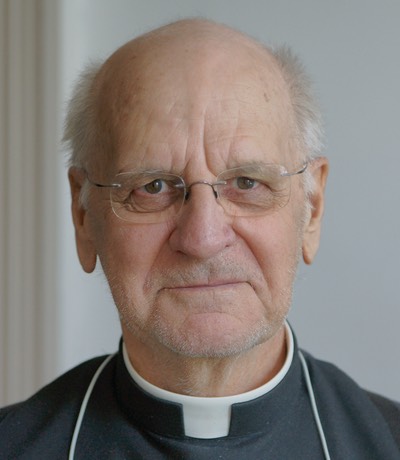
Bishop Schneider defended the SSPX’s episcopal consecrations as acts necessary to continue their work preserving the perennial Catholic faith clearly and fully, in its doctrine and sacraments.
 Bishop Athanasius
Schneider, speaking at a conference in Rome, October 2023Michael Haynes
Bishop Athanasius
Schneider, speaking at a conference in Rome, October 2023Michael Haynes
- 18
Tue Aug 18, 2026 - 3:55 pm EDT
Listen to this article
8 min
(LifeSiteNews) — Bishop Athanasius Schneider compared the Society of St. Pius X (SSPX) to firefighters whom a fire chief punishes for using “tried and true” methods to help extinguish flames threatening a house.
In a statement shared by journalist Diane Montagna, Schneider recalled the excommunication of St. Athanasius to shed light on the current censure of the SSPX by the Vatican. He recounted that Pope Liberius pronounced this excommunication against St. Athanasius for refusing to “enter into communion with Arian and semi-Arian bishops” who endorsed heresy or were complicit in heresy.
“Today, St. Athanasius would be considered a schismatic according to the definition of ‘schism’ in the current Code of Canon Law, since he refused to be in communion with members of the Church (heretic and semi-heretic bishops) who were canonically recognized and thus subject to the Pope,” Schneider observed.
He framed the SSPX’s episcopal consecrations as an instance of a “rare dilemma” of having to choose between preserving the perennial Catholic faith clearly and unambiguously “or being canonically recognized by the Pope.” This is demonstrated, he noted, by the fact that one of the conditions of the SSPX’s recognition by the Vatican is that they fully accept the Second Vatican Council, which contains “doctrinal ambiguities” as well “accept not only the validity but also the legitimacy” of the New Mass “despite its doctrinal and ritual vagueness, which marks a clear rupture with the traditional Roman Rite.”
The bishop took aim at “unhealthy developments within the Church” that have contributed to an attitude of condemnation toward the SSPX: legalism, which treats man-made law as absolute, and papalism, which treats the pope as absolute. According to this “narrowed view of reality,” Catholics have come to prioritize legalism and papalism over clear doctrine, he said.
“Yet during every great doctrinal crisis in the Church’s history, the iron rule was to avoid any kind of doctrinal ambiguity,” Schneider pointed out. He highlighted the example of Pope Honorius I, who issued “doctrinally ambiguous” letters that were later “firmly condemned” by popes and three ecumenical councils despite the attempt of his successor to establish a “hermeneutic of continuity.”
In ignorance of this historical example, today it is “widely claimed within the Church that no conflict of conscience can arise between obeying the Pope and preserving the unambiguous purity of the faith,” Schneider noted.
“This ultimately means that obedience to the Pope is valued so highly that it is considered better to accept ambiguities in matters of faith and liturgical rites than to act against a Pope’s command — even though that command is only human and may be flawed,” Schneider continued.
He pointed out that today people have a false and “narrow” understanding of what it means to be in communion with the Catholic Church, reducing it to “obedience to the Pope.”
“This risks elevating obedience to the Pope to the same level as obedience to God’s divine revelation,” Schneider noted.
Haut du formulaire
SUBSCRIBE TO OUR DAILY HEADLINES
Bas du formulaire
According to St. Robert Bellarmine, unity with the Church requires profession of the same faith and communion of the sacraments as well as remaining “under the governance of legitimate pastors, and especially the Roman Pontiff.” St. Bellarmine has also maintained that it is “lawful” to “resist” a pope who “attacks the body,” “oppresses souls,” and especially “attempts to destroy the Church.”
Schneider similarly stressed that in “extraordinary” circumstances a Catholic“may be required in conscience to act contrary to positive law (disciplinary laws enacted by human Church authority) precisely in order to remain uncompromisingly faithful to Divine Law.”
He pointed out that the requirement that episcopal ordinations be carried out with the approval of the pope is an example of positive law – and only a recent one. Moreover, “even after that development, canon law did not regard illicit episcopal ordinations … as offenses against the unity of the Church, as inherently schismatic acts, or as intrinsically evil.”
The SSPX has a particularly strong incentive to continue the work of its priests through episcopal consecrations because, Schneider noted, it is “virtually the only community in the Church today that openly draws attention to the evident doctrinal ambiguities in certain conciliar statements and in the rite of the New Mass, calling for their unequivocal clarification and, if necessary, even amendment, in accordance with the constant Magisterium of the Church.”
The bishop criticized the attempt to use a “hermeneutic of continuity” to interpret the Second Vatican Council – which is the approach most commonly used by Catholics outside the SSPX who desire orthodoxy – as one that “merely covers over, cosmetically, the wounds caused by doctrinal and liturgical ambiguities and confusion.”
“In effect, the Holy See requires a form of circular reasoning: that everything is in order, provided one makes sufficiently strenuous intellectual efforts,” he added.
He went on to use an analogy to convey the necessity of the SSPX’s ministry and its ordination of bishops to continue this preservation of the traditional faith and sacraments:
The current crisis between the Holy See and the SSPX can also be illustrated by the following parable: A fire breaks out in a great house. The fire chief permits the use of only the new firefighting methods, even though these have proven less effective than the old, tested methods and tools. A group of firefighters defies this order, continues to use the tried-and-tested methods, and even recruits new firefighters – all despite the fire chief’s prohibition – and indeed, the fire is contained in many places. Yet these firefighters are branded disobedient and schismatic and are punished for it.
To extend the parable further: the fire chief now admits only those firefighters who acknowledge the new methods and obey the new firehouse regulations. But given the sheer scale of the fire, the desperate struggle to contain it, and the insufficiency of the official methods, other helpers selflessly intervene – despite the fire chief’s prohibition – bringing skill, knowledge, and good intentions, and in the end helping to save the very house the fire chief was struggling to protect.
Schneider concluded, “History will one day reveal whether the following words St. Augustine apply to the current situation with the SSPX:”
Often Divine providence permits even good men to be driven from the congregation of Christ by the turbulent seditions of carnal men. When for the sake of the peace of the Church they patiently endure that insult or injury, and attempt no novelties in the way of heresy or schism, they will teach men how God is to be served with a true disposition and with great and sincere charity. The intention of such men is to return when the tumult has subsided.
But if that is not permitted because the storm continues or because a fiercer one might be stirred up by their return, they hold fast to their purpose to look to the good even of those responsible for the tumults and commotions that drove them out. They form no separate conventicles of their own, but defend to the death and assist by their testimony the faith which they know is preached in the Catholic Church. These the Father who seeth in secret crowns secretly. It appears that this is a rare kind of Christian, but examples are not lacking. So divine providence uses all kinds of men as examples for the oversight of souls and for the building up of his spiritual people” (De vera religione, 6:11).
TOPICS
TAGGED AS
